
01
From Harvest
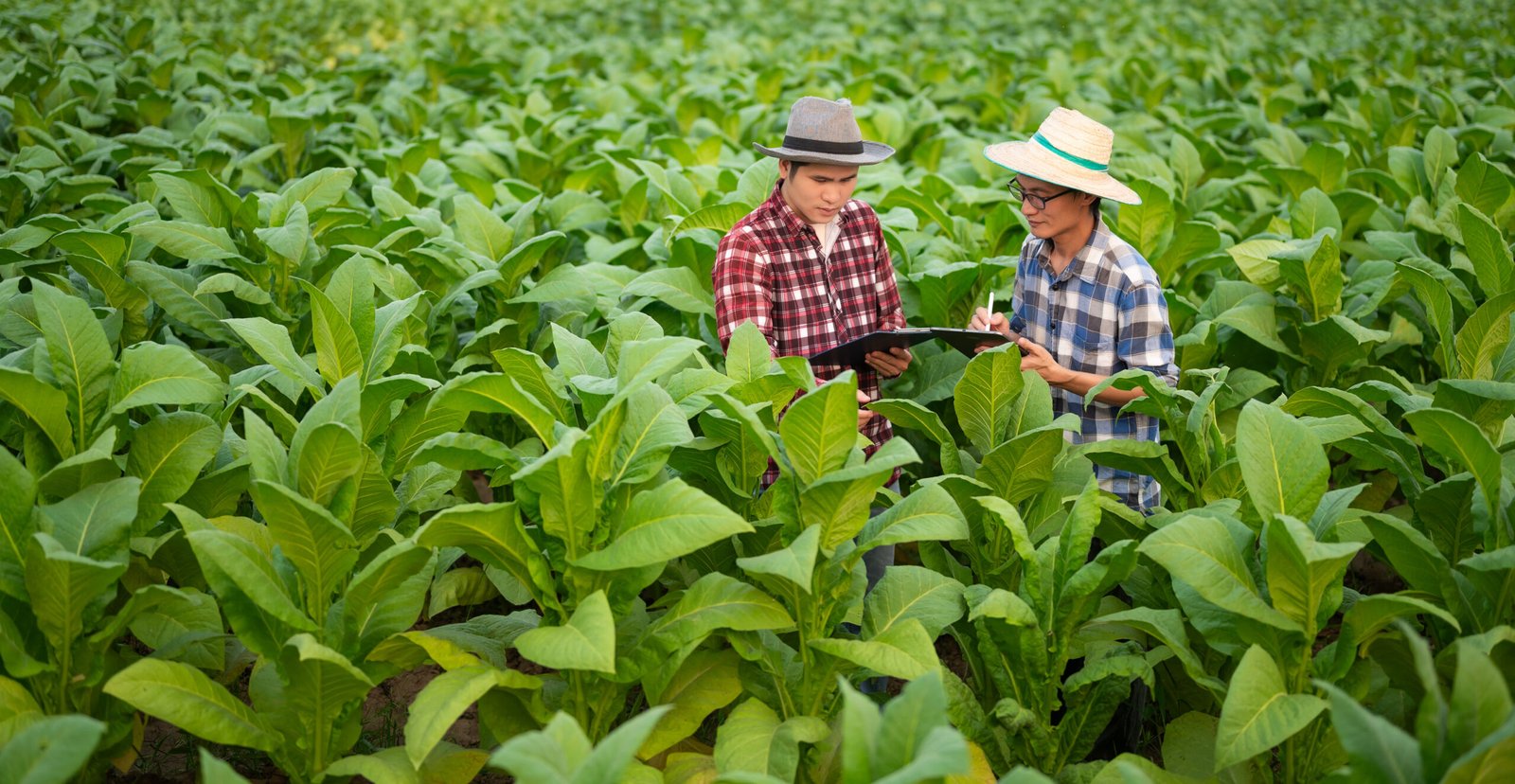
Carefully selected tobacco leaf is harvested at its best—chosen for its structure, aroma, and natural character.
Craftsmanship
A cigar is not made quickly, and Dos Hermanos does not try to make it so. From harvest, the tobacco leaf is left to rest and ferment before it is ready to be rolled—a process that can take anywhere from three to ten years, allowing the leaf to develop the depth and stability of flavor that raw tobacco alone cannot offer.
Once ready, each cigar is hand-rolled—a discipline that separates true craftsmanship from mechanized production. Where machine-made cigars priorities speed and uniformity, hand-rolling depends on trained judgement: reading the leaf, balancing the blend, and shaping the construction by feel, cigar by cigar. It is a skill built over years, not automated in minutes.
The process does not end with the roll. To preserve their integrity, finished cigars are stored under controlled conditions a consistent 20°C and 70% relative humidity the same standard maintained by premium cigar houses worldwide, ensuring the tobacco's character is preserved from production to the point of sale.
This is the standard to which Dos Hermanos holds itself: not the fastest path to a finished product, but the most deliberate one where every stage, from leaf to fermentation to roll, is treated as part of the craft.
01
Carefully selected tobacco leaf is harvested at its best—chosen for its structure, aroma, and natural character.
02
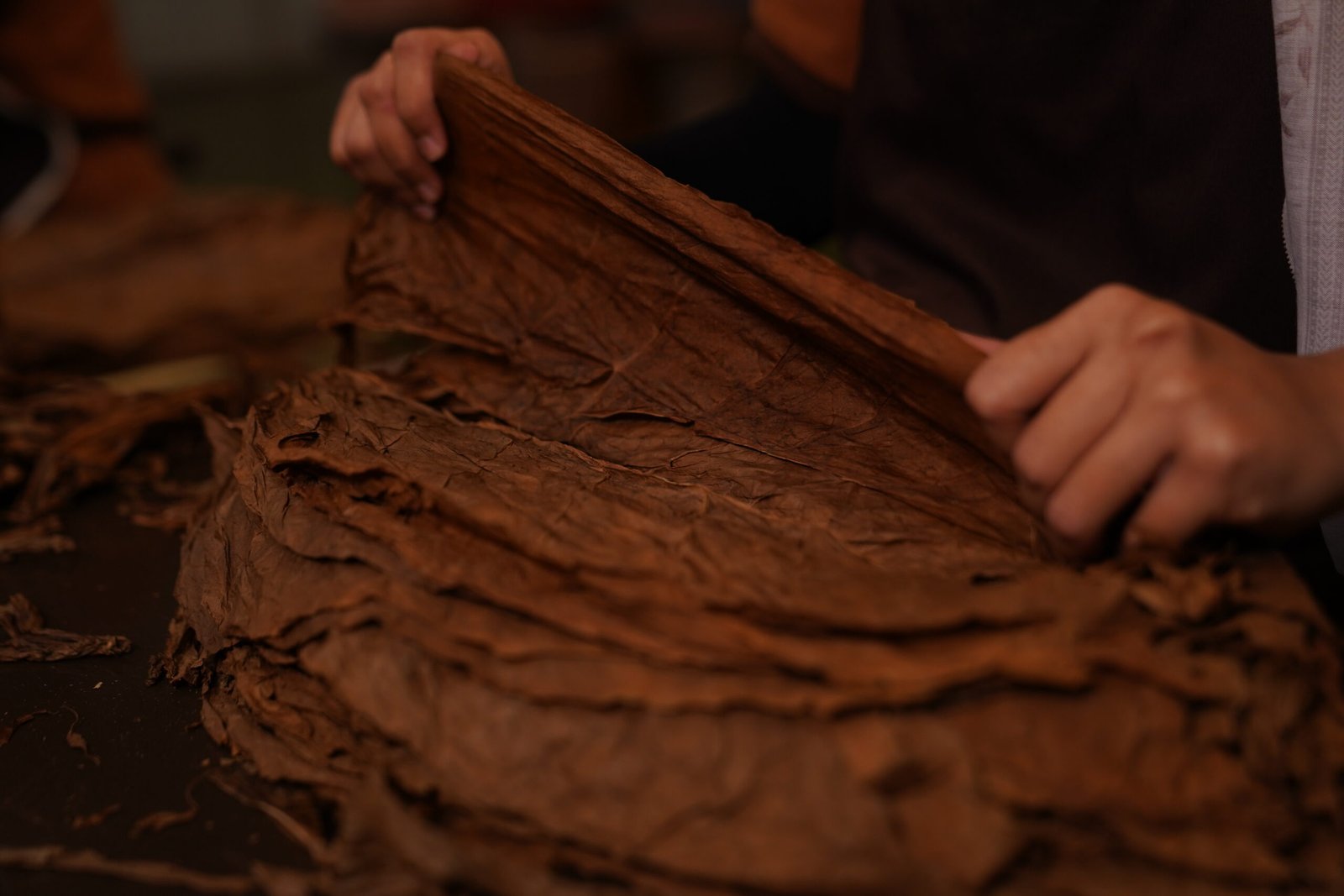
The leaf is left to rest and ferment—sometimes for years—allowing the tobacco to develop depth, smoothness, and stability of flavor.
03
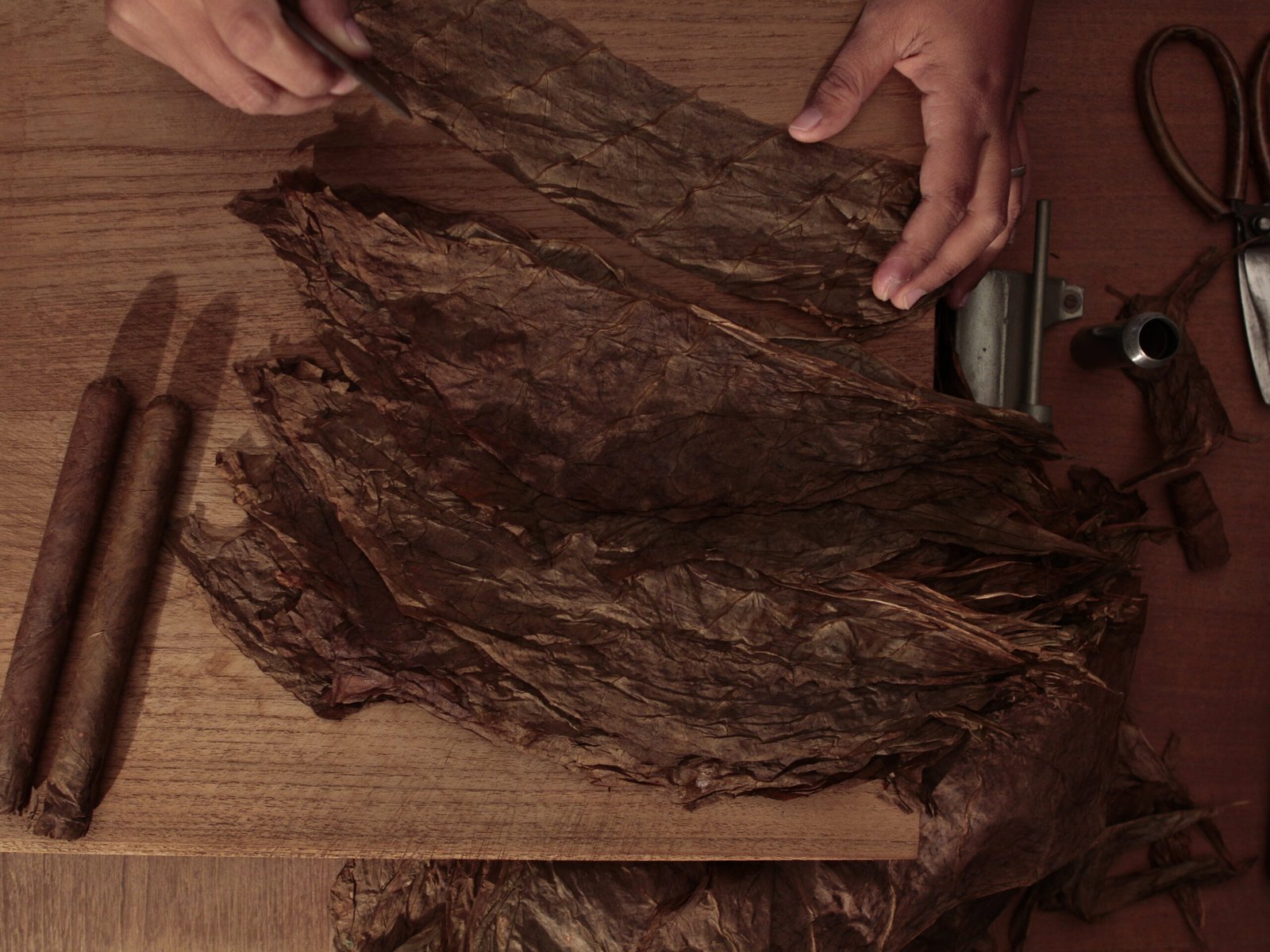
Skilled artisans hand-roll each cigar with precision and experience—balancing the blend and shaping the construction by feel.
04
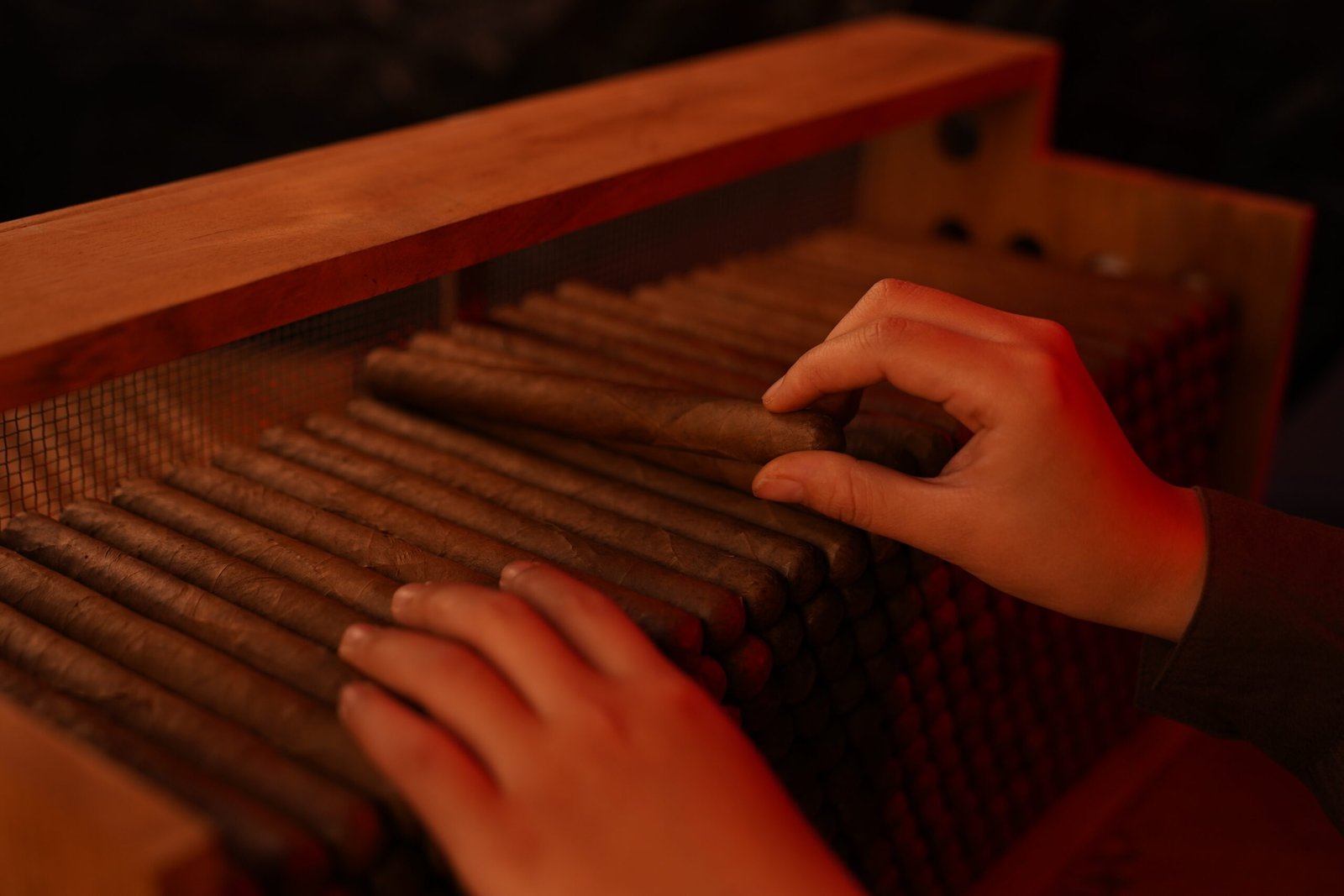
Finished cigars are stored under controlled conditions at 20°C and 70% relative humidity, preserving their integrity and character.
How to Enjoy a Cigar
Enjoying a cigar well is less about ceremony and more about technique. A few fundamentals make the difference between a rushed experience and one that reflects the work put into the cigar itself.
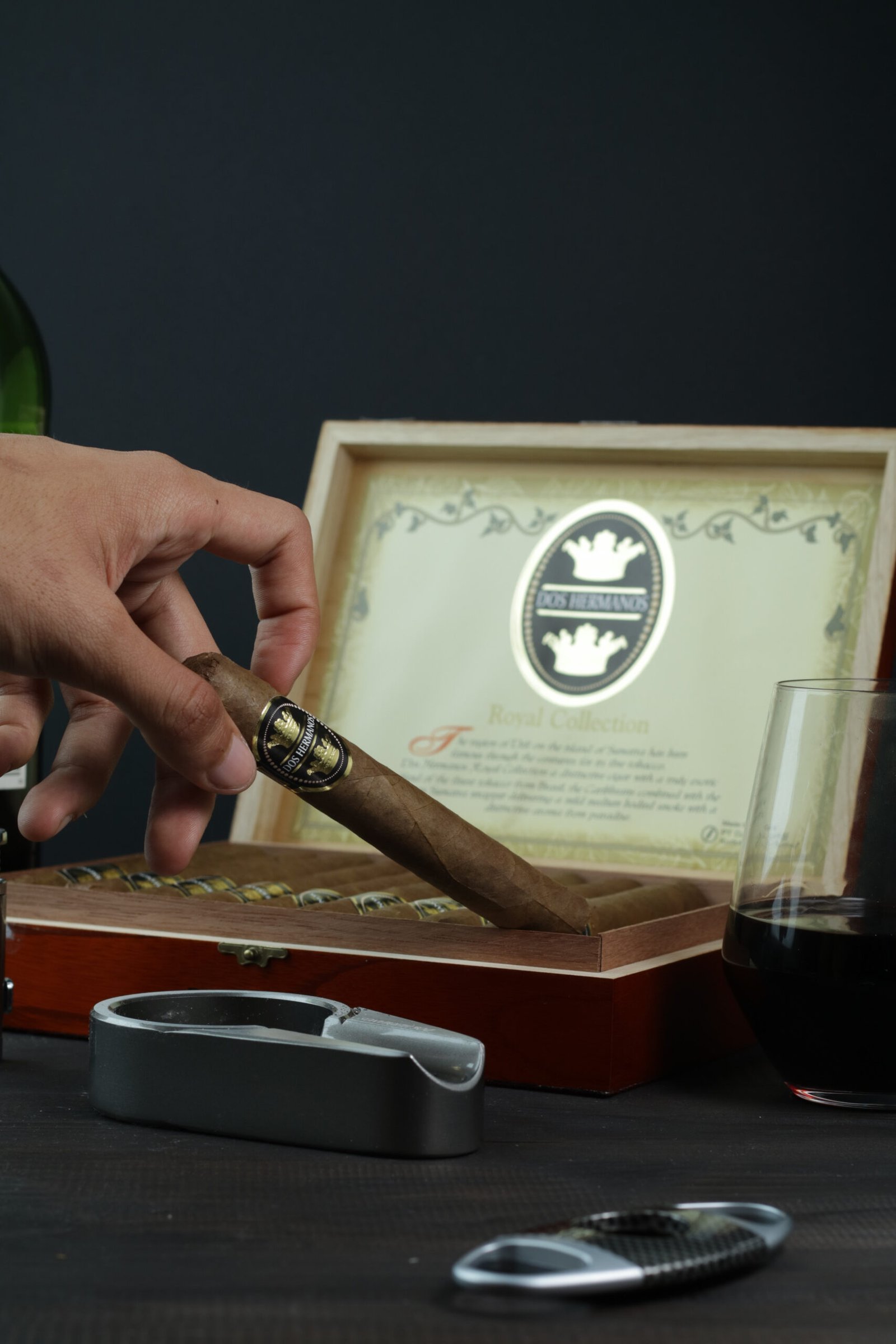
Body and strength vary by blend—mild, medium, or full—and pairing them with the occasion matters more than reputation alone. A shorter window calls for a smaller vitola; a longer, unhurried setting suits a larger one.
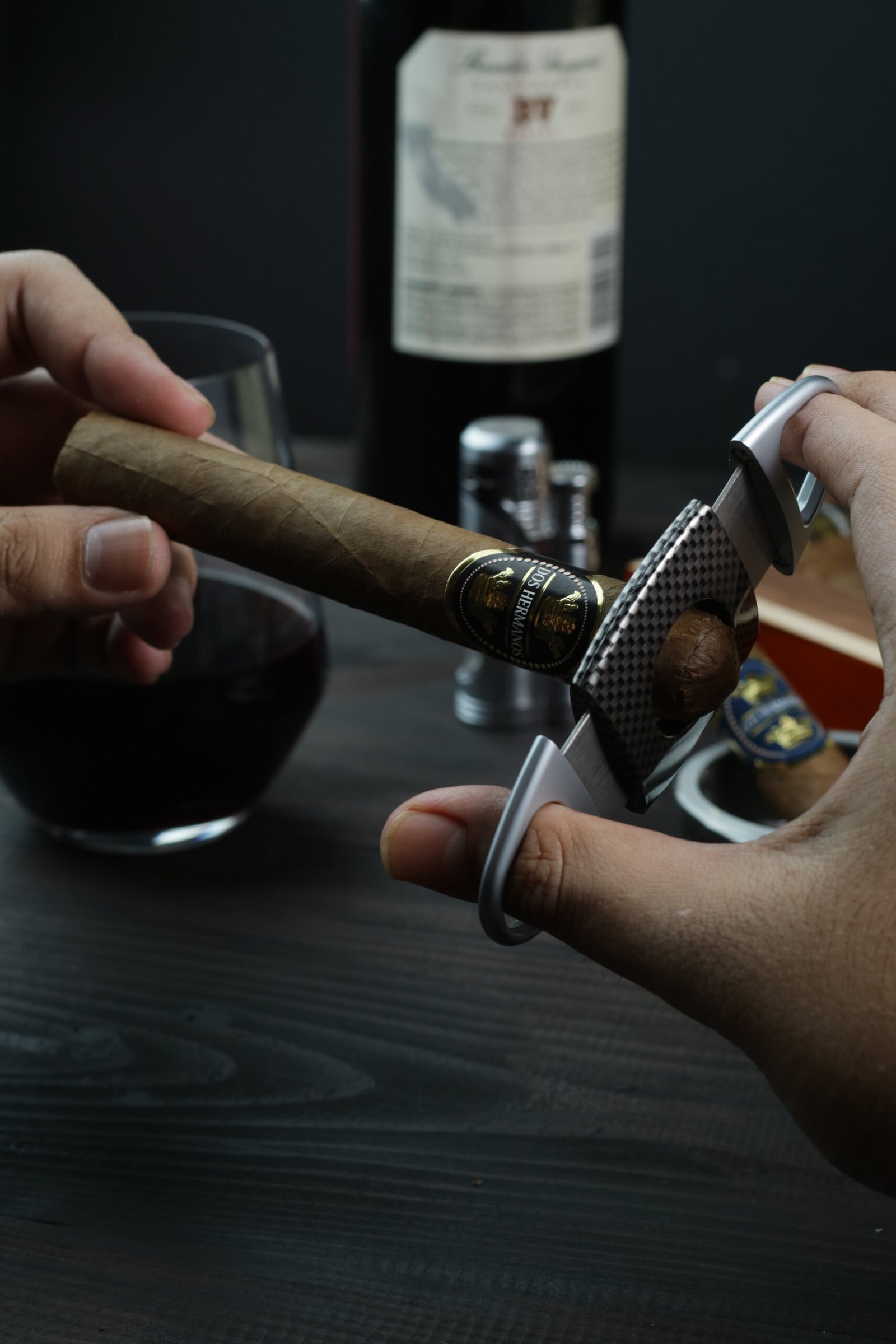
Locate the shoulder—where the rounded cap begins to straighten into the body of the cigar—and cut there. A double-bladed cutter offers the cleanest, most controlled result: position the head between the blades, hold it steady, and cut in one confident motion. A hesitant cut risks tearing the wrapper and unravelling the construction beneath.

A cigar rewards patience. Drawing too quickly overheats the leaf and flattens its character; a slower, more deliberate pace lets the blend's complexity develop as intended, often shifting in profile from start to finish.
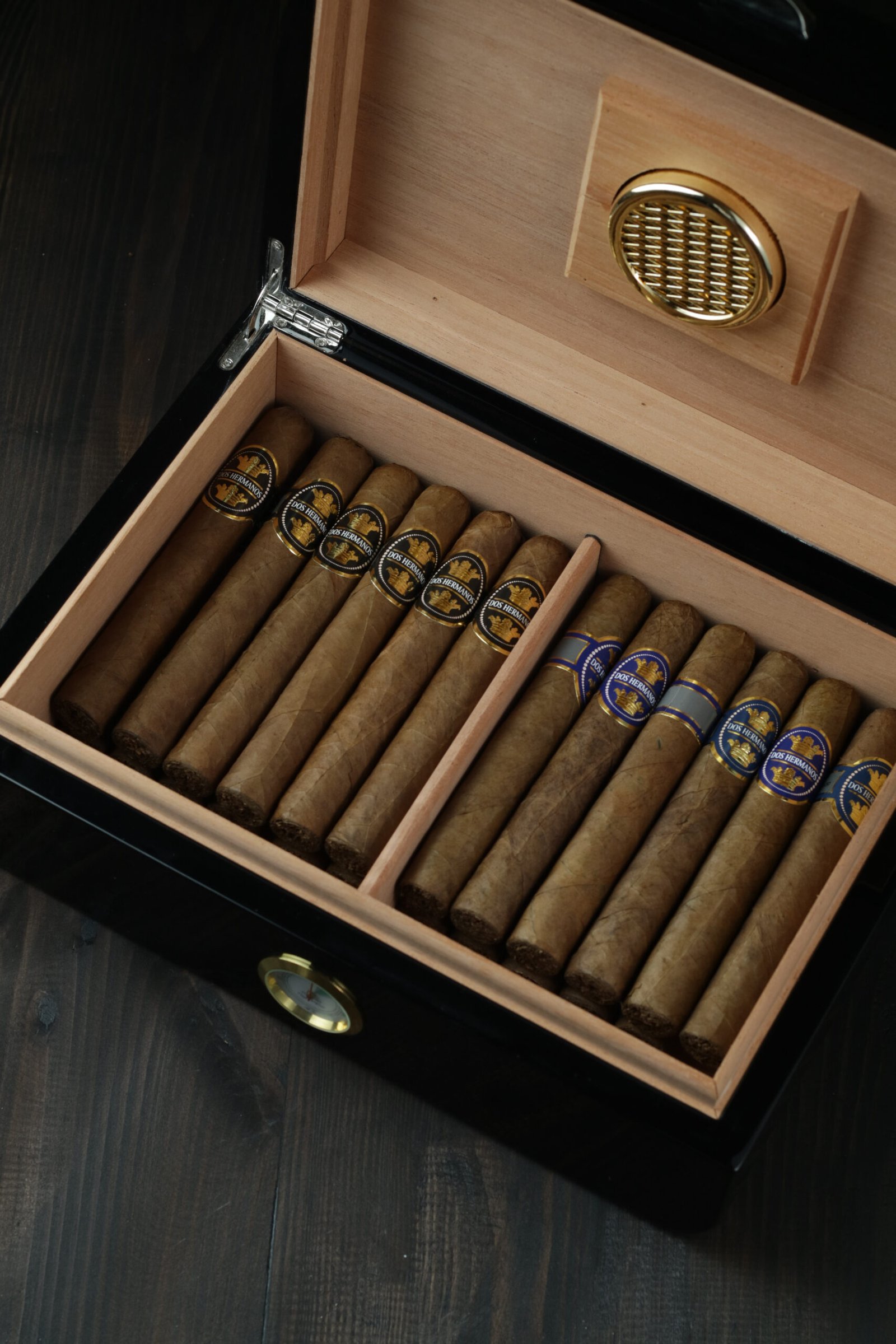
Between occasions, cigars should be kept in a humidor maintained at approximately 20°C and 70% relative humidity—conditions that preserve the leaf's oils and structural integrity over time. Cigars stored outside these conditions lose consistency quickly, regardless of how well they were made.
Technique aside, the essentials remain constant: a good cut, an unhurried pace, and proper storage in between—the same fundamentals observed by cigar houses worldwide.